회복력 높은 미래를 향하여: 송도 이음 공동체텃밭 연구 사례
Blažka Rupnik, Seoul National University / 블라쉬카 (비비) 루프닉, 서울대학교 사회과학대 지리학과
Blaž Križnik, University of Ljubljana / 블라쉬 크리즈닉, 류블랴나 대학교 인문대 아시아학부
2024년 1월에 새로운 연구 프로젝트인 CASIE를 시작했다.* 이 연구는 동아시아와 유럽에서 지역 공동체 회복 기능이 높은 도시를 구축하는 데 있어 마을 공동체의 집단행동과 사회혁신의 중요성을 더 잘 이해하는 것을 목표로 한다. 구체적으로, 공동체의 집단행동과 사회혁신에 대한 연구는 다음과 같은 점을 살펴본다. 첫째, 공동체가 어떤 이유로 그리고 어떤 방식으로 함께 협력하여 지역 터전을 살기 좋고 지속가능한 공간으로 만드는지; 둘째, 공동체가 지역 공동체 회복기능을 강화하기 위해 새롭고 혁신적인 방법을 어떻게 찾아내고 적용하는지; 셋째, 어떤 공공정책과 비영리단체-도시주민-정부 간의 협력 관계가 공동체의 집단행동과 사회혁신을 지속시키는지; 넷째, 마을 공동체가 동아시아와 유럽 도시들의 회복력에 어떻게 영향을 미칠 수 있는 지이다.
연구 사례로 삼을 국가를 선정하는 것은 어렵지 않았다. 이전에 싱가포르, 슬로베니아, 그리고 한국의 마을 공동체에 대한 연구를 수행한 바 있다. 대만의 도시는 강한 마을 공동체와 지역사회 구축을 지원하는 정책으로 잘 알려져 있기 때문에, 이번에 연구 과제를 설계할 때 연구 사례 목록에 대만을 추가했다. 그러나 다른 세 국가의 경우 사례 연구에 적합한 지역공동체를 찾는 것은 더 어려웠다. 공동체는 일상 생활에서 마주하는 구체적인 문제들을 해결하기 위해 협력하는 것이 일반적이다. 이러한 문제들은 매우 지역화되어 있기 때문에, 공동체의 집단행동과 사회혁신의 우수 사례가 해당 도시를 넘어 널리 알려지는 경우는 드물다. 한국에서도 잘 알려져 있지 않은 경우가 많고, 해외에서도 마찬가지이다.
인천의 이음텃밭은 주목할 만한 집단행동과 사회혁신의 우수 사례 중 하나이다. 2022년 여름 부터, 블라쉬 교수는 한양대학교 학생들과 함께 처음으로 이음텃밭을 방문했는데 이전에 방문했던 어떤 텃밭들과도 많이 다르다는 것을 곧바로 느낄 수 있었다. 이음텃밭 사업에 참여하는 도시농부들은 함께 텃밭을 가꾸며 큰 정성과 자부심을 보여주었고, 무더운 여름 날에도 학생들과 기꺼이 경험을 나누어 주었다. 학생들은 공동체텃밭이 단순히 작물을 재배하는 것뿐만 아니라 공동체를 성장시키는 활동이라는 점을 금세 깨달았다.
이 경험 덕분에 이음 공동체텃밭을 지역공동체의 집단행동과 사회혁신의 첫 번째 사례 연구 대상으로 선정하게 되었다. 그 다음, Onkraj gradbišča (온크라이 그라드비슈차)라는 슬로베니아 공동체텃밭과 Cambridge Greenway (캠브리지 그린웨이)라는 싱가포르의 공동체텃밭을 사례 연구 대상으로 추가했다.
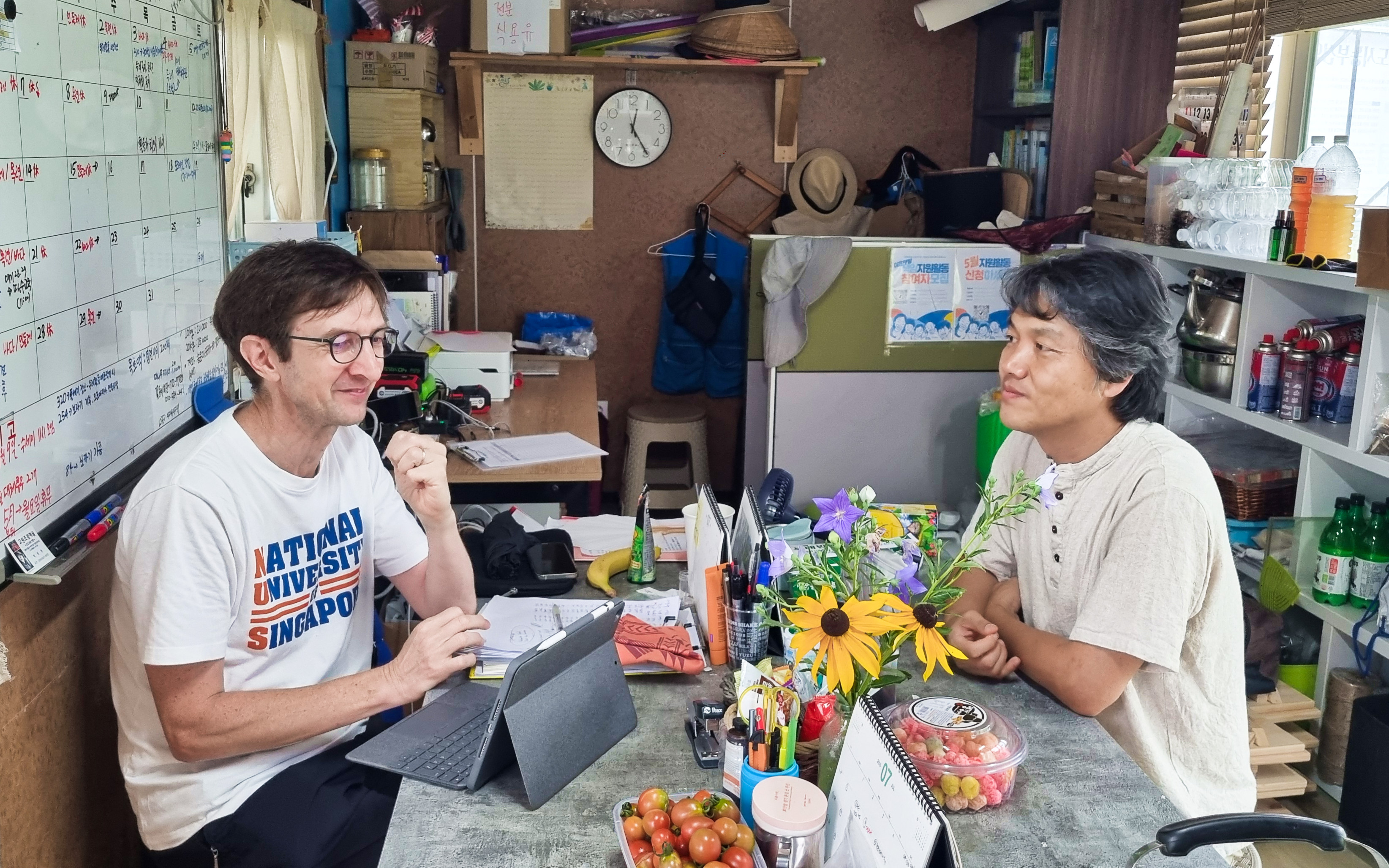
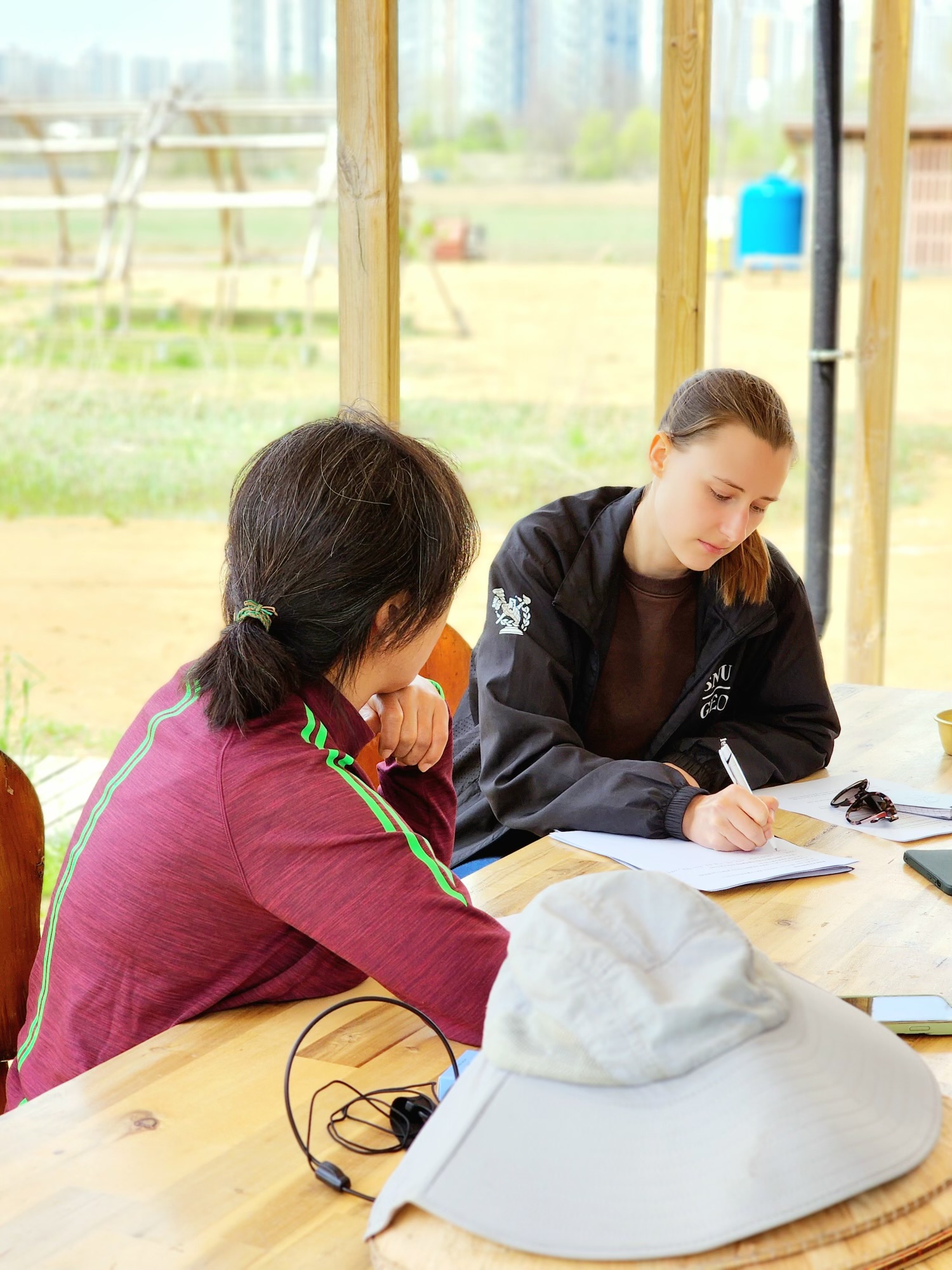
이음 공동체텃밭에서의 현장 조사는 2025년 4월에 시작되었으며, 참여 관찰과 인터뷰를 기반으로 진행되었다. 참여 관찰을 통해 도시농부들의 행동, 관행, 상호작용을 관찰했다. 이를 통해 단순히 도시농부들이 무엇을 하는지 뿐만 아니라, 그러한 행동의 동인까지 이해하고자 했다. 현장 조사는 연중 여러 시기에 걸쳐 이루어졌다. 연구자들은 봄의 마른 주황빛 흙과 정성스럽게 멀칭된 텃밭부터 가을의 푸르고 아름답게 꾸며지고 식물로 가득한 텃밭까지 관찰할 수 있었다. 비비는 시농제 축제로 시작하는 봄 계절에 현장 조사를 시작했고, 블라쉬 교수는 여름 동안 텃밭을 관찰했으며, 비비는 ‘2025 공동체텃밭 활동가 대회: 도시를 바꾸는 공동체텃밭의 전환’과 ‘2025년 공동체텃밭 한마당’에 참석하며 가을에 현장 조사를 마무리했다.
그 동안 도시농부들, 도시농업 및 공동체텃밭 활동가, 봉사 활동가, 이음텃밭 활동가, 인천도시농업 네트워크 소속 구성원들, 공무원들과 대화를 나누었다. 모든 분들은 아낌없이 시간과 소중한 통찰을 나누어 주신 덕분에 연구자들은 도시농업과 마을공동체를 일구는 것을 더 잘 이해하게 되었다.
블라쉬 교수는 과거에 공동체텃밭에 대한 폭넓은 연구를 수행한 바 있는 반면, 비비에게는 한국에서 도시농업에 대한 첫 연구이자 현장조사였다. 비비는 텃밭을 이용하는 사람들이 새로운 기술을 배우거나 가르치고 환경과 다시 연결하려는 진지한 노력에 감탄했을 뿐만 아니라, 도시농부들, 활동가, 그리고 인천도시농업네트워크 구성원들이 만들어낸 따뜻하고 환영하는 공동체텃밭의 분위기에 깊은 인상을 받았다. 현장 방문과 인터뷰를 거듭할수록, 연구자 두 명은 스스로 식량을 재배하고 공동체 활동에 참여하며, 자신의 동네를 더 살기가 좋고 지속 가능한 공간으로 만들기 위해 노력하는 공동체에 대한 존경심이 점점 깊어졌다.
연구자들은 이음 공동체텃밭이 지금까지 연구해 온 다른 텃밭들과 달리 공동체 형성과 환경을 특히 강조한다는 점에서 매우 독특하다고 생각한다. 지금까지 방문한 한국, 슬로베니아, 싱가포르의 모든 공동체텃밭에서 따뜻하게 환대받았다. 배경, 언어, 문화가 다르더라도 공동체텃밭에 참여하는 사람들은 공동체와 환경에 대해 놀라울 정도로 비슷한 생각을 공유하고 있었다. 이러한 공통점 덕분에 인천, 류블랴나, 싱가포르의 공동체텃밭 사람들과의 소통도 매우 수월했다.
이음 공동체텃밭과 그곳의 도시농부들은 공동체와 환경에 대해 들려줄 이야기가 매우 많으며, 그들에게서 배울 점도 많다. 연구자들 역시 많은 것을 배웠으며, 이 경험을 소중히 여긴다. 연구자들은 앞으로 더 많은 분들이 도시농업을 통해 지역 공동체를 경험하고 그 중요성을 깨달을 수 있기를 바란다. 이번 연구가 이음 공동체텃밭이 한국 공동체텃밭의 우수 사례일 뿐만 아니라, 지역 공동체 회복 기능이 높은 미래 도시를 위한 모델로서 주목받아야 한다는 점을 알리는 데 기여할 수 있을지 기대한다.
Towards resilient future: Ieum Community Garden as a case study
Blažka Rupnik, Seoul National University
Blaž Križnik, University of Ljubljana
We launched our new research project, CASIE, in January 2024.* The study aims to better understand the importance of neighbourhood collective action and social innovation in building resilient communities and cities in East Asia and Europe. Specifically, we want to understand how and why communities act collectively to make their neighbourhoods better and more sustainable places to live; how they look for innovative ways to build their resilience; which public policies and partnerships sustain collective action and social innovation in communities; and how neighbourhood communities can affect the resilience of cities in East Asia and Europe.
Selecting the countries on which to focus our study was not difficult. We have previously done research on neighbourhood communities in Singapore, Slovenia and South Korea. This time, we have added Taiwan to the list because their cities are known for strong neighbourhood communities and for policies supporting community building.
However, finding neighbourhood communities for our case studies in these countries proved to be more difficult. Communities typically collaborate to overcome specific challenges in their everyday living environment. Such challenges are highly localised, and the best practices of neighbourhood collective action and social innovation are rarely recognised beyond their cities. They are often not well known within their countries, let alone overseas.
The Ieum Community Garden in Incheon is one example of best practice of collective action and social innovation that deserves more attention. In the summer of 2022, Blaž visited the garden for the first time with his students from Hanyang University. They soon discovered that the Ieum Community Garden was unlike any garden they had visited before. The gardeners took great care and pride in tending to their gardens together and kindly shared their experiences with the students even though it was a very hot summer day. The students could easily understand why community gardening is not only about growing food but also about growing community.
It was this experience that helped us select the Ieum Community Garden as our first case study of neighbourhood collective action and social innovation. Following the selection of Ieum Community Garden, we added the Onkraj gradbišča Community Garden in Slovenia and Cambridge Greenway in Singapore as our next case studies. Finally, our research project was about to begin.
We began our fieldwork at the Ieum Community Garden in April 2025. The fieldwork was based on two research methods: participant observation and interviews. Through participant observation, we immersed ourselves in the garden, observing behaviour, practices and interactions of the gardeners. In this way, we sought to understand not only what the gardeners do, but also why they do. This included several site visits at different times of the year. We observed from dry orange soil and meticulously mulched plots to lush green and beautifully decorated gardens overflowed with plants. Blažka covered the spring season, starting with the Sinongje festival held at the Mansu Village Community Garden. Blaž continued to observe the garden during the summer and Blažka eventually wrapped up the fieldwork in the autumn by attending the 2025 Community Garden Activists Conference: The Transformation of Community Gardens Changing Cities (2025 공동체텃밭 활동가대회:도시를 바꾸는 공동체텃밭의 전환) and 2025 Community Garden Festival (2025 공동체텃밭 한마당).
At the same time, we conducted several formal and informal interviews with the gardeners, volunteers, mentors, members of the Incheon Urban Agriculture Network and public officials. Everyone generously shared their time and precious insights with us, helping us to better understand urban agriculture and community building at the Ieum Community Garden.
While Blaž has conducted extensive research on community gardening in the past, it was Blažka’s first research and fieldwork on urban agriculture in South Korea. Alongside everyone’s sincere effort to learn or teach a new skill and (re)connect with the environment, she fondly remembers the welcoming and warm atmosphere of the garden, which was created by the gardeners, mentors, and IUAN members. With each site visit and interview, we both felt a growing admiration for the community that actively grows their own food, engages in community building, and aims to make their neighbourhood a better and more sustainable place to live.
We share a view that the Ieum Community Garden is unlike any other garden we have studied because of its strong focus on community building and the environment. Despite this, we also felt very welcome when we visited other community gardens in South Korea, Slovenia and Singapore. Regardless of their background, language or culture, people engaged in community gardening seem to share remarkably similar views about community and the environment. This similarity made communication with people from community gardens in Incheon, Ljubljana and Singapore very easy.
The Ieum Community Garden and its people have many stories to tell about the community and the environment. There is much to be learned from them. We have done our share of learning and we are very grateful for that. Hopefully, others can learn in the same way. We are excited to see if our research project can help one understand that the Ieum Community Garden deserves attention as a best practice of community gardening in South Korea and as a vision for a more resilient future.
* See: http://casie.splet.arnes.si/

[관련 자료] 위 연구와 관련되어 참고할 만한 자료입니다.
https://dosinong.tistory.com/46
지역사회의 집단행동으로서의 한국과 슬로베니아의 도시텃밭
얼마전 슬로베니아의 유학생에게서 이메일로 문의가 왔었습니다. 이음텃밭의 연구와 관련하여 방문과 함께 인터뷰를 하고 싶다는 내용이었죠. 몇 번 이메일로 연락을 주고받다가 직접만나 유
blog.dosinong.net
https://dosinong.tistory.com/115
사람과 자연, 이웃을 잇다: 2025 이음텃밭 성과공유회 현장 스케치
사람과 자연, 이웃을 잇다: 2025 이음텃밭 성과공유회 현장 스케치지난 12월 16일, 한 해의 결실을 맺고 새로운 시작을 다짐하는 '2025 이음텃밭 성과공유회'가 성황리에 개최되었습니다. 김동수 이
blog.dosinong.net
https://youtu.be/p1I9JNmU1GY?si=QSPzeL5ckFB8q6jU
'컬럼' 카테고리의 다른 글
| 농생태학 이야기 1 - 농업 시스템의 오류와 농생태학적 재시도 (1) | 2026.01.20 |
|---|---|
| 안병덕의 작물이야기 1 – 작물의 분류, 쌍떡잎식물과 외떡잎식물의 신비로 운 차이 (1) | 2026.01.20 |
| 텃밭 교육학 시론_ 정용주 (1) | 2025.12.16 |
| 파리의 농부들 (1) | 2025.11.21 |
| 전환의 시대, 도시농업의 재구성 ② - 철학적 재구성 (2) | 2025.09.24 |